Republic v Paul Mackenzie & 30 others; a Case Brief and Analysis
This article breaks down the judgment in the Shakahola case that was recently delivered by Justice Diana Kavedze against Paul Mackenzie & 30 Others in Malindi HCCR E003 of 2024. At Amasakha Kioi Advocates, we are committed to helping you read and understand complex legal issues and topics such, as this, and any other that you may be going through.
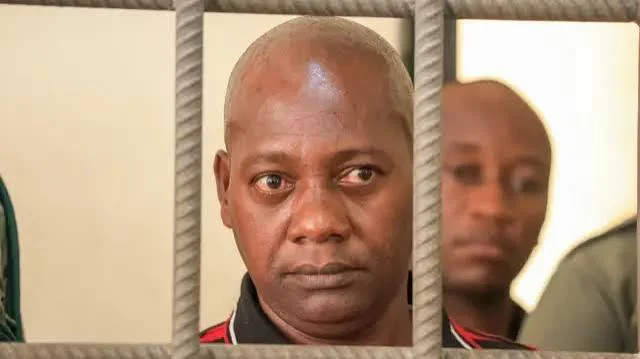
Shakahola. A name that shall forever echo as one of the darkest chapters in the life of our nation.
When Justice Diana Kavedza begun reading the judgement at 8:00 am on 19th October 2026, it would take her a little over Eight (8) hours to finish. In many ways, the judgement she was reading stands out from all other judgements passed by the High Court of Kenya. Important details, like the Opening Glossary, and table of Biblical & Scripture References, show you that this is not a judgement like any other.
Scale
The Prosecution of Mackenzie alias Mtumishi, Nabii, Papaa, and his 30 disciples, turned co-accused, is without a doubt, one of the biggest cases handled by the Kenyan Judiciary since independence. They were jointly charged in a 350-paged Charge Sheet with the deaths of 191 people; 190 of the victims being children of whom, only 11 were identifiable.
The Trial
To prove their allegation that Makenzi and his fellow accused caused the deaths of the victims, the Prosecution brought forth 120 witnesses who compromised of survivors, relatives of the victims, members of the community who participated in the rescue attempts, forensic examiners and even witnesses who were experts in cultism and theology.
Together, they testified on how Pastor Mackenzi and his church, the Good News International, had regularly run into trouble with authorities for his radical teachings forbidding children to stay away from school, culminating in him facing charges under the Prevention of Terrorism Act. The Communication Authority of Kenya had also suspended the license of his station; Good News Media, after having found that he had broadcast inappropriate content - namely violent exorcisms during watershed periods.
These legal troubles did not seem to have deterred Mackenzie. If anything, he improvised. Together with his cabal, they drew inspiration from the story in the book of Revelations, where a woman escapes a dragon by fleeing into the wilderness, and he convinced his followers to abandon their "earthly" jobs and relocate to a wilderness named Shakahola, located in Kilifi County where they could be free from the interference of the world.
The Court was told how, in Shakahola, the 30 co-accused assumed various roles, such as; Village Elders, Videographers, Grave Diggers, and Guards who enforced the fast, prevented victims from escaping and in certain situations, accelerated the death of fasting victims by bludgeoning them.
The Defense on their part produced 9 witnesses and argued that the accused did not radicalize anyone and that all victims, voluntarily chose to fast to their deaths. This defense did not stand a chance.
Judgement & Obiter
The Court found the Accused guilt because, in one way or another, they had all shown intention / malice afore-thought (mens rea) to cause the death and or grievous harm to each of the 191 victims. This was displayed in:
- The repeated instructions that the Accused gave to victims instructing them to fast to their deaths.
- The use of violence as a means of ensuring Compliance of the instructions to fast to death.
- The deliberate denial of food, water and or medical aid.
- Threatening & assaulting the rescuers & journalists who came to the scene.
- Concealing bodies.
As a bonus, Justice Diana Kavedze in one of the most brilliant Obiter Dictum to come from the Bench, went a step further to analyze if whether the Accused would have been found guilty had they been charged with Crimes Against Humanity under the Rome Statute or the Kenyan International Crimes Act. The answer was a resounding Yes.
In an analysis, whose likes were last seen in the International Criminal Tribunals of (former) Yugoslavia & Rwanda (ICTY & ICTR), Justice Diana demonstrated that Makenzie and his co-accused carried out a widespread and systematic attack against a civilian population in furtherance to an Organizational Policy , and that these attacks amount to crimes against Humanity, particularly the crimes of extermination, murder, torture and severe deprivations of physical liberty.
Brilliant as it is, it however amounts to the Court playing the role of the Prosecutor, simply because the Prosecution had failed / refused to charge Makenzie with Crimes against Humanity. This negligence is quite unfortunate, because the crimes committed by the Accused were indeed Crimes against Humanity and as a bonus, this case would have gone down in history as the first ever conviction under our fresh International Crimes Act.
Last words
All together this matter took 3 years and some months, making it on of the fastest ever settled criminal cases of this size. Justice was quickly secured for the hundreds of victims in Shakahola many of whom remain unidentified. The name Shakahola, to quote Justice Diana Kavedza, will forever echo as one of the darkest chapters in the life of our nation.
Partner with Amasakha Kioi Advocates
While the judgement and the prosecution of this case, was quite complex, Amasakha Kioi Advocates takes pride in breaking down complicated legal discussions and ensuring that they are accessible and easily understandable by the general public. Whether you are a victim or an accused, we will guide you through Criminal Proceedings, and ensure that justice is served in fulfillment to your constitutional rights. Simply reach out to us today by filling out this form, and an Advocate will be assigned to assist you: forms.gle/p7LFiBQEDcWS7Qaz7